Smarter cell culture media development for modern biomanufacturing
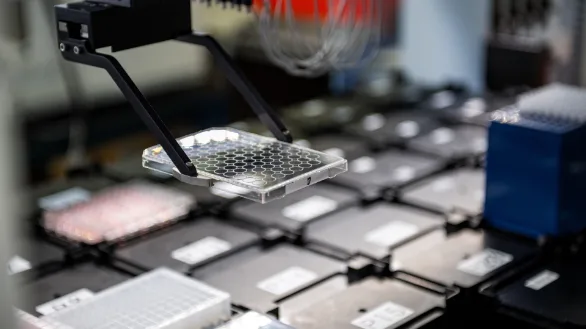
Cell culture media sits at the heart of every biomanufacturing process. Yet while cell engineering, automation, and manufacturing technologies have advanced dramatically over the past two decades, the way cell culture media is developed has barely evolved at all. That is now beginning to change, not least because modern antibody production demand more from media than simply supporting cell growth. Manufacturers need formulations that improve productivity, simplify downstream processing, strengthen supply chains, and drive commercial manufacturing. As a result, cell culture media development is entering a new era.
Why traditional media development is reaching its limits
For decades, cell culture media development has relied on experience and incremental experimentation. Researchers have adjusted one or two ingredients, observed the results, and gradually refined a formulation over multiple rounds of testing. This approach has produced many successful media formulations, particularly for established production systems such as CHO cells. However, it is becoming increasingly difficult to meet the demands of modern biomanufacturing.
Media formulations can contain more than 50 individual components, each interacting with the others in complex ways. At the same time, manufacturers are developing increasingly diverse cell lines and more complex antibody production, from HEK293-derived products and viral vectors to bispecific antibodies and other next-generation modalities. A formulation that performs well for one process would most probably not deliver the same results for another.
Manufacturers are also under pressure to shorten development timelines, improve productivity, reduce costs, and build more resilient manufacturing processes. Media development is no longer expected to simply support cell growth, but it must also contribute to manufacturing performance.
Meeting these challenges requires more than larger experiments or incremental improvements; it requires a fundamentally different approach to media development that combines biology with engineering, automation, and data-driven learning.
What does modern cell culture media development actually look like?
Modern cell culture media development is increasingly applying engineering principles to what has traditionally been viewed as a biological challenge. At its core is a familiar engineering cycle: design, build, test and learn. Each round of experimentation generates new data, which informs the next generation of formulations. Rather than making isolated changes, every experiment builds on what has already been learned.
Automation makes this possible on a much greater scale. Researchers can evaluate many more formulations in parallel, generating large, high-quality experimental datasets that AI and machine learning can analyze to identify patterns and recommend which experiments are most likely to generate valuable new information. Rather than relying solely on existing public datasets, each experiment contributes new knowledge that improves future predictions. Many modern media development platforms also use Bayesian optimization to select the next experiment based on everything learned so far. Instead of following a predefined experimental design, each experiment is chosen because it is expected to provide the greatest insight, allowing optimization to progress far more efficiently.
Perhaps the biggest shift, however, is philosophical. Traditionally, scientists have tried to understand every biological mechanism before identifying the best formulation, whereas modern approaches place greater emphasis on learning directly from experimental data. As knowledge accumulates, machine learning models become better at predicting which formulations are likely to perform well, even when every biological interaction is not fully understood. The objective is not simply to generate more data but to generate better experimental data, learn faster, and continuously improve future predictions. Rather than depending solely on historical or publicly available datasets, every experiment expands the knowledge base, allowing increasingly accurate decisions about which formulations to test next.
Modern cell culture media development starts with the end in mind
Modern media development takes several factors into account, identifying formulations that perform well in the laboratory, as well as considering whether they can be manufactured, sourced, and commercialized successfully. Intellectual property is a good example; freedom-to-operate considerations can be incorporated into the development process from the outset, rather than identifying an optimal formulation only to discover that key ingredients or combinations are already patented. Patent restrictions become another design parameter, allowing scientists to focus on formulations that are both high performing and commercially viable.
The same thinking applies to the availability of ingredients, regulatory expectations, and supply chain resilience. Considering these factors early in cell culture media development helps to reduce risk later in process development, resulting in formulations that are better suited to commercial manufacturing.
Better media means more than better cell growth
Historically, successful media development was measured by cell growth, viability, and product titer. While these outcomes remain important, they are no longer the only measures of success.
Today’s manufacturers must also consider downstream processing, manufacturing scalability, process robustness, and supply chain security. Decisions made during media development can influence purification requirements, manufacturing efficiency, and the long-term commercial viability of a product. Media has become more than simply another process input, and is now an important lever for improving manufacturing performance and creating more resilient bioprocesses.
What’s next for cell culture media development?
The demands placed on cell culture media will continue to evolve as biomanufacturing advances.
Future development will continue to bring together biological expertise, engineering principles, automation, AI, and machine learning to optimize formulations more efficiently than ever before. More importantly, it will enable manufacturers to develop media tailored to specific cells, molecules, and manufacturing processes, rather than relying on one-size-fits-all formulations.
The future of media development will be defined by generating better experimental data, learning faster, and applying engineering-led approaches to continuously improve media design. As the industry continues to evolve, cell culture media will become far more than another consumable; it will become a strategic advantage.
Talk to one of our scientists about media designed for the cell types you’re working with.