
Ready to unlock your cells’ potential?
No other teamis as dedicated to advancing cell culture media as Multus. Talk to our mediaspecialists today!


No other teamis as dedicated to advancing cell culture media as Multus. Talk to our mediaspecialists today!

Executive Summary
Challenge
Screening media compositions for AAV manufacturing requires high-throughput capsid titer assessment across hundreds of formulations. Conventional ELISA-based titer methods are labor-intensive and ill-suited to automation, quickly becoming the bottleneck in large-scale screening programs. The rapid expansion of engineered AAV variants further demands a sngle universal assay with pan-serotype coverage that can integrate into a 384-well automated workflow without sacrificing accuracy.
Project Overview
Multus partnered with PROGEN to validate the Pan AAV Capsid Titer Assay for use in an automated high-throughput format, targeting:
The project was structured in two phases using the CyBio FeliX liquid handler with integrated Pan AAV Capsid Titer Assay analytics:
Phase 1: Format and Equipment Validation
Phase 2: Automated Reproducibility Assessment
Our Solution
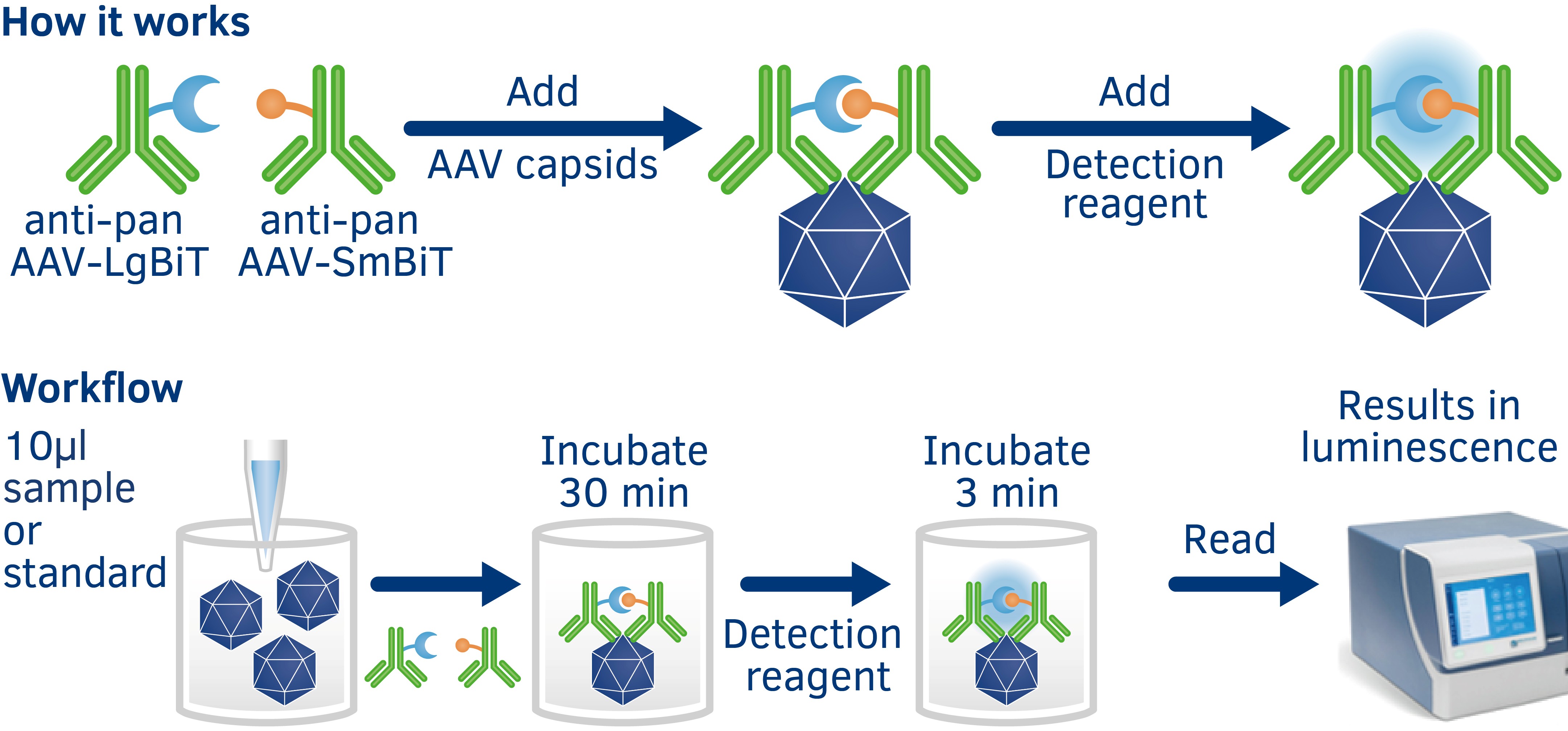
The Pan AAV Capsid Titer Assay uses Lumit® immunoassay technology built around a split NanoLuc® luciferase system. An anti-pan AAV antibody is individually labeled with two complementary luciferase subunits, LgBiT and SmBiT. When both bind a shared conformational epitope on intact capsids, the reconstituted NanoLuc® enzyme generates a luminescent signal proportional to intact capsid concentration.
Because the epitope is conserved across serotypes, a single formulation covers both common and novel engineered variants without protocol adjustments. The no-wash, add-and-read workflow delivers results in under one hour. The CyBio FeliX liquid handler was deployed to transfer samples from a 96-well source plate into 384-well assay plates, processing 96 unique samples alongside an independent standard curve per run.
The Results
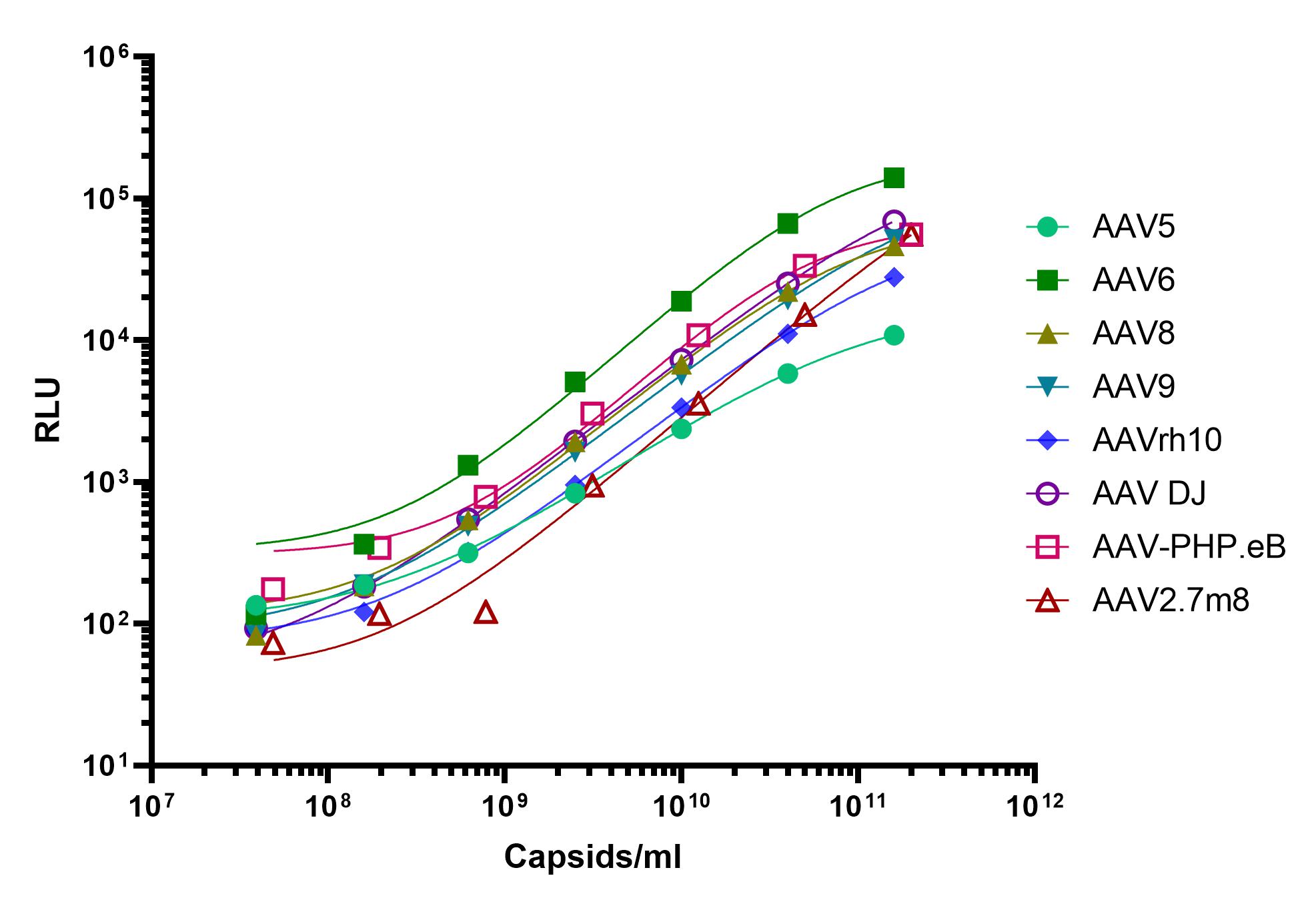


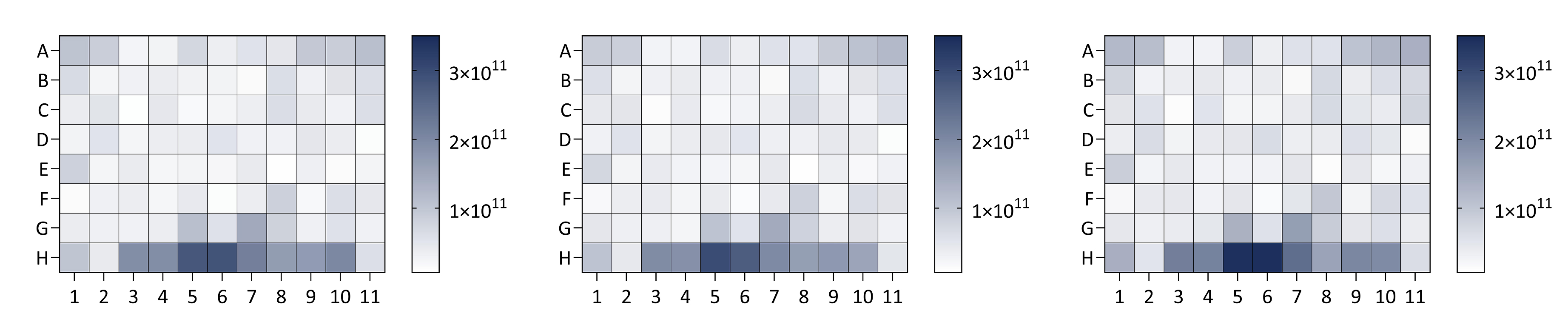
Key performance highlights include:
Future Outlook
Multus plans to integrate the Pan AAV Capsid Titer Assay directly into its MediOP™ platform for AAV manufacturing media optimization, enabling systematic formulation screening across multiple serotypes and cell line backgrounds. The assay's pan-serotype coverage makes it well-suited to keep pace with the continued emergence of novel engineered capsid variants.
By combining PROGEN's Pan AAV Capsid Titer Assay with MediOP™'s automated experimentation capabilities, AAV developers gain a scalable, serotype-agnostic titer workflow supporting both early-stage process development and commercial media optimization.
Technical Note: Capsid titer quantification utilized PROGEN's Pan AAV Capsid Titer Assay employing Lumit® immunoassay technology and NanoLuc® split luciferase complementation (Promega Corporation). Automated liquid handling was performed using the CyBio FeliX liquid handler (Analytik Jena, an Endress+Hauser Company). Independent external validation was conducted by six laboratories across multiple serotypes, including common and custom capsids.
See here for more information: Pan AAV Capsid Titer Assay
Founded in Heidelberg, Germany, in 1983, PROGEN provides labs worldwide with reliable, user-friendly, and high-quality analytical tools for gene therapy development. PROGEN’s portfolio spans AAV assays, antibodies, LVV quantification assay, and LNP kits, combining decades of expertise with a collaborative approach to help scientists deliver safe, scalable, and life-changing therapies. Visit the PROGEN website for more information.
Sign up for email updates:

